Select and customize the fundraising method best suited for your organization
BetterWorld seamlessly integrates with both online and in-person auctions
Impress donors with creative raffle items and elegant online raffles
Create attractive donation pages that maximize donor impact and boost online giving
Want to build an effective fundraising campaign?
Our team is here to give you more details and guides on how to grow your fundraiser.
Book a demo →
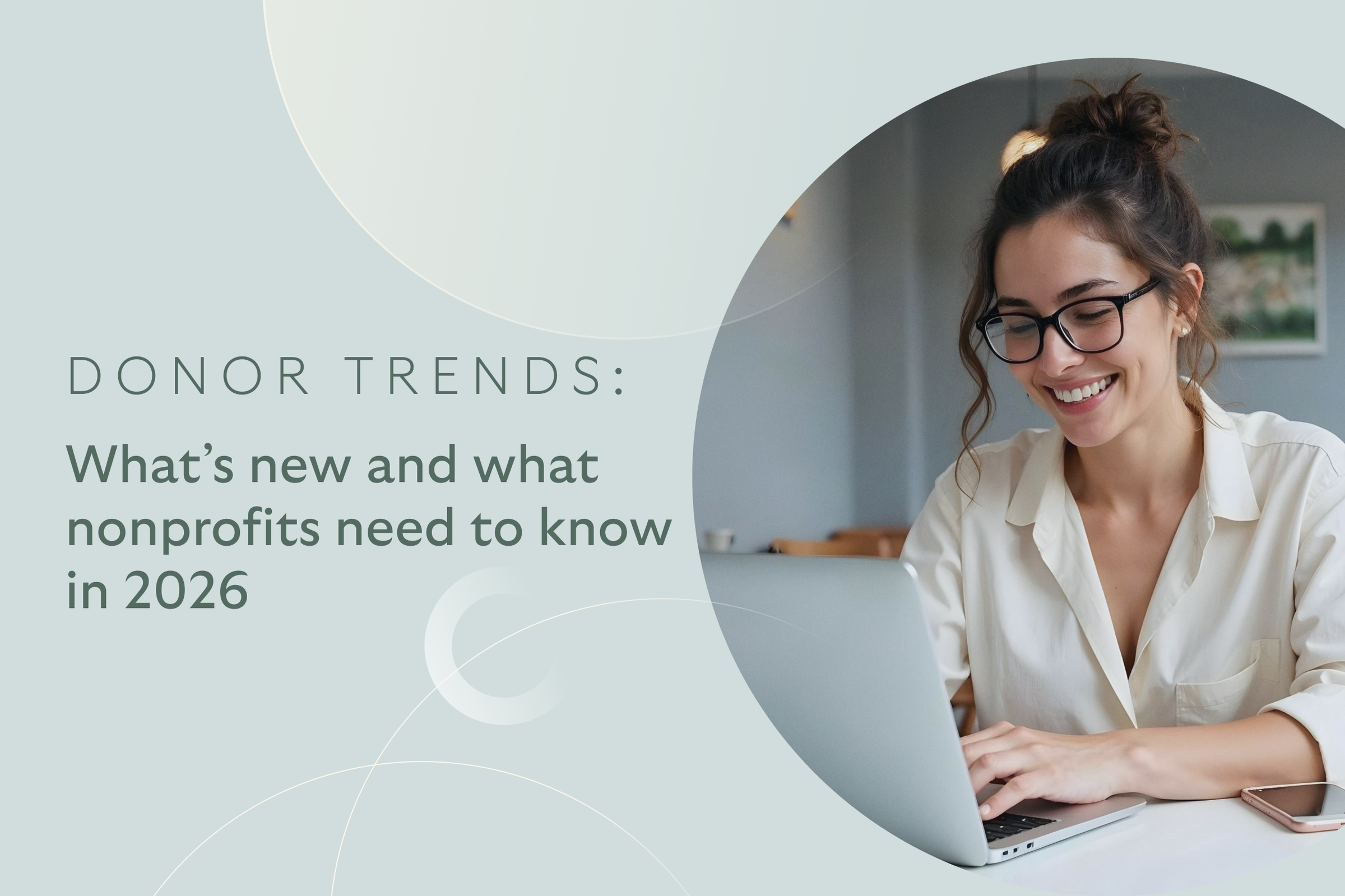
Donor trends: What’s new and what nonprofits need to know in 2026
By Team BetterWorld on
Contrary to some beliefs, the desire to give hasn’t gone away in 2026. People still care about causes that reflect their values and beliefs. What’s changed is the pace of decision-making and the tolerance for friction along the way.
Donors now move from interest to action quickly, and their confidence is shaped in the moment, often by the experience itself.
For many nonprofits, this shift can feel unsettling. Teams are smaller, budgets are under pressure, and earning donor attention takes more effort than it once did. The margin for error during the giving process is thinner.
Today, we’ll look at how today’s donor has changed, where giving is happening now, and the common friction points that can quietly cause donations to drop off.
What’s changing about donors in 2026
Let’s look at what’s shaping donor behavior today.
1. Mobile giving comes first
Today’s donors are mobile-first by default. They donate from their phones often between tasks or while scrolling. If the form doesn’t load quickly, doesn’t resize correctly, or requires too many steps, they’ll leave without donating.
More than 45% of all digital donations now come from mobile devices, which is making the shift the new standard.
2. Speed signals trust
Donors judge a nonprofit's trustworthiness based on how easy it is to give. If the checkout process feels familiar and smooth, they’re more likely to follow through.
“People want to give, but they want to make sure they’re giving to a place that is really going to take what they are given and do great things with it.” — Colin Hunter, Co-founder, BetterWorld
In 2026, slow-loading pages, surprise fees, or unclear steps cause them to drop off completely. A fast, frictionless experience is now part of how organizations earn trust.
3. Smaller, more frequent gifts
One-time, large donations aren’t the main driver of online giving anymore. Donors are increasingly preferring monthly giving and small, flexible commitments.
Monthly gifts now account for 31% of all online revenue for nonprofits, and this portion is growing steadily while one-time giving remains relatively flat.
Micro-donations allow donors to stay involved without feeling locked in. Nonprofits that support flexible giving plans are meeting people where they are.
4. Impact must be clear from the start
Donors don’t want to guess where their money goes. They want to see the value of their gift before they hit “donate,” not buried in a report months later.
Simple, real-time messages like “$10 provides clean water for one family” go further than long explanations. Clear, upfront impact increases the chance that a donor completes their gift and feels good about doing it.
5. Donors bring consumer expectations with them
Donors now expect giving to feel just like shopping online. They’re used to features like:
- One-click checkouts
- Saved payment methods
- Instant confirmations
- Transparency around the use of funds
If your donation experience feels slow or outdated, it sends the wrong message, even if someone fully supports your mission.
“Every consumer is a donor, and every donor is a consumer. It’s the same people.” — Colin Hunter, Co-founder, BetterWorld
6. Trust is built in the first few seconds
Brand size no longer guarantees trust. Donors now judge organizations by how well they handle their time, attention, and intent to give.
They’re silently asking:
- Is this easy?
- Is this clear?
- Does this feel worth my time and money?
If the answer is no, they often leave without saying why.
Where are donors giving in 2026
Some nonprofits are still seeing consistent growth, but many are struggling to convert interest into actual gifts, even when engagement appears strong.
Donors are supporting fewer organizations
One of the clearest patterns in 2026 is concentration. Donors are giving to fewer nonprofits overall. That means every opportunity to give carries more weight. There’s less room for confusion, delay, or friction during the donation process.
Even small issues such as unclear language, extra steps, or hidden fees can lead to drop-offs. Every part of the experience has to earn the gift. This pattern isn’t limited to one cause or campaign type. It’s consistent across the entire sector:
“The patterns of donor behavior are extremely consistent across every different type of nonprofit.” — Colin Hunter, Co-founder, BetterWorld
Recurring support is now driving growth
Recurring support is now a major factor in long-term revenue. One-time gifts still occur, but growth is driven by donors who return through monthly giving or follow-up contributions.
That makes the first giving experience critical. A smooth, clear interaction increases the chance of return.
The average donor retention rate through Q2 2025 was 26.3%, with new donor retention at just 11%.
Giving happens quickly, often outside campaigns
In 2026, giving happens online, often without planning. A donor might move from interest to action in a few minutes. But that same donor may abandon the process just as fast if something feels off.
Spontaneous giving is common now. What matters is whether the experience can meet the moment.
Try BetterWorld’s robust suite of charity & nonprofit fundraising tools for FREE!
Poor experience quietly reduces revenue
These changes add up to a clear pattern: fundraising results are now tied directly to the quality of the donation experience. Small friction points reduce revenue in ways that are hard to track.
Donors rarely give feedback. They just stop giving. The difference between a completed gift and a missed one often comes down to details nonprofits overlook.
What friction points cause donors to abandon donations?
Most donors don’t back out because they’ve changed their mind about your mission. They leave because something in the process makes them hesitate. And today, hesitation happens fast.
1. Hidden or unexpected fees
Donors want to know where their money is going. When fees are introduced late in the process or aren’t clearly explained, trust can erode in seconds.
Common friction points include:
- Fees are revealed only at the final step
- Unclear language around who covers processing costs
- Donors feel surprised by a lower-than-expected impact
“These hidden fees are real, and they add up.” — Colin Hunter, Co-founder, BetterWorld
Transparency matters. When donors understand what’s happening with their gift up front, they’re more likely to follow through and feel good about it.
2. Multi-step or overly complex checkouts
Every additional step in a donation flow increases the chance that a donor drops off.
Long forms, unnecessary questions, and multiple screens can turn a moment of generosity into a chore. This is especially true for first-time donors, who haven’t yet built trust with an organization.
Friction often shows up as:
- Too many required fields
- Unclear progress indicators
- Asking for information that isn’t essential to giving
3. Poor mobile experiences
Mobile giving is no longer secondary. For many donors, it’s the primary way they give. When donation forms aren’t optimized for mobile, donors may encounter:
- Slow load times
- Buttons that are hard to tap
- Forms that don’t resize properly
- Checkout steps that feel clunky or confusing
61% of users say they will leave a mobile site if they can’t find what they’re looking for immediately. If the experience feels frustrating on a phone, donors are unlikely to switch devices; they’re more likely to leave.
“Having a good understanding of technology and utilizing it in your fundraising strategy is not a nice-to-have. It’s honestly a need-to-have in our current society.” — Colin Hunter, Co-founder, BetterWorld
4. Requiring an account to donate
Asking donors to create an account before they can give is one of the fastest ways to lose momentum.
For donors, this can feel like:
- An unnecessary hurdle
- A time commitment they didn’t expect
- A request made too early in the relationship
Most donors are willing to share information after they’ve given, not before. Removing barriers at the moment of giving helps ensure intent turns into action.
Why friction matters in 2026 and how you can remove it with BetterWorld
These friction points don’t always seem big. But together, they send one message: giving here takes work.
That’s a problem in a landscape where donors are giving to fewer organizations, making decisions faster, and expecting seamless digital experiences. When the process feels slow or confusing, generosity stalls.
Remember, most people who click “Donate” don’t complete the donation. Studies show that 50% to 70% of donors drop off before completing their gift.
The good news is that many of these barriers are fixable and often without major changes. At BetterWorld, we’ve built donation forms that load fast, work on any device, and make giving simple.
No platform fees. No coding. Just clear, mobile-friendly tools that help more donors complete their gift.
Join thousands of nonprofits using BetterWorld to raise more with less hassle. You can also schedule a conversation with one of our team members—get on our calendars here!
FAQs
1. What are the main reasons donors leave before completing a donation form?
Donors often abandon donation forms because the process is too long, requires too many clicks, asks for an account, or isn’t optimized for mobile devices. Reducing these barriers can lower abandonment.
2. Why is mobile optimization critical for donation pages?
Mobile users now make up a large share of potential donors. In fact, 57% of nonprofit website visitors are using mobile devices. If donation forms aren’t responsive or easy to complete on a phone, abandonment rates rise significantly
3. How does donation form design influence donor trust?
If a form looks outdated, confusing, or misaligned with nonprofit branding, donors may question its legitimacy and leave before contributing.
4. Can simplifying donation questions help reduce abandonment rates?
Yes. Asking only for essential information, such as payment and basic contact details, helps donors complete their gifts faster and with less hesitation.

Join 105,000+ amazing nonprofits, organizations, and fundraisers on BetterWorld

Let our FREE fundraising tools help you raise more funds with less effort