Select and customize the fundraising method best suited for your organization
BetterWorld seamlessly integrates with both online and in-person auctions
Impress donors with creative raffle items and elegant online raffles
Create attractive donation pages that maximize donor impact and boost online giving
Want to build an effective fundraising campaign?
Our team is here to give you more details and guides on how to grow your fundraiser.
Book a demo →
Starting strong: your nonprofit's Q1 planning checklist for 2026
By Team BetterWorld on
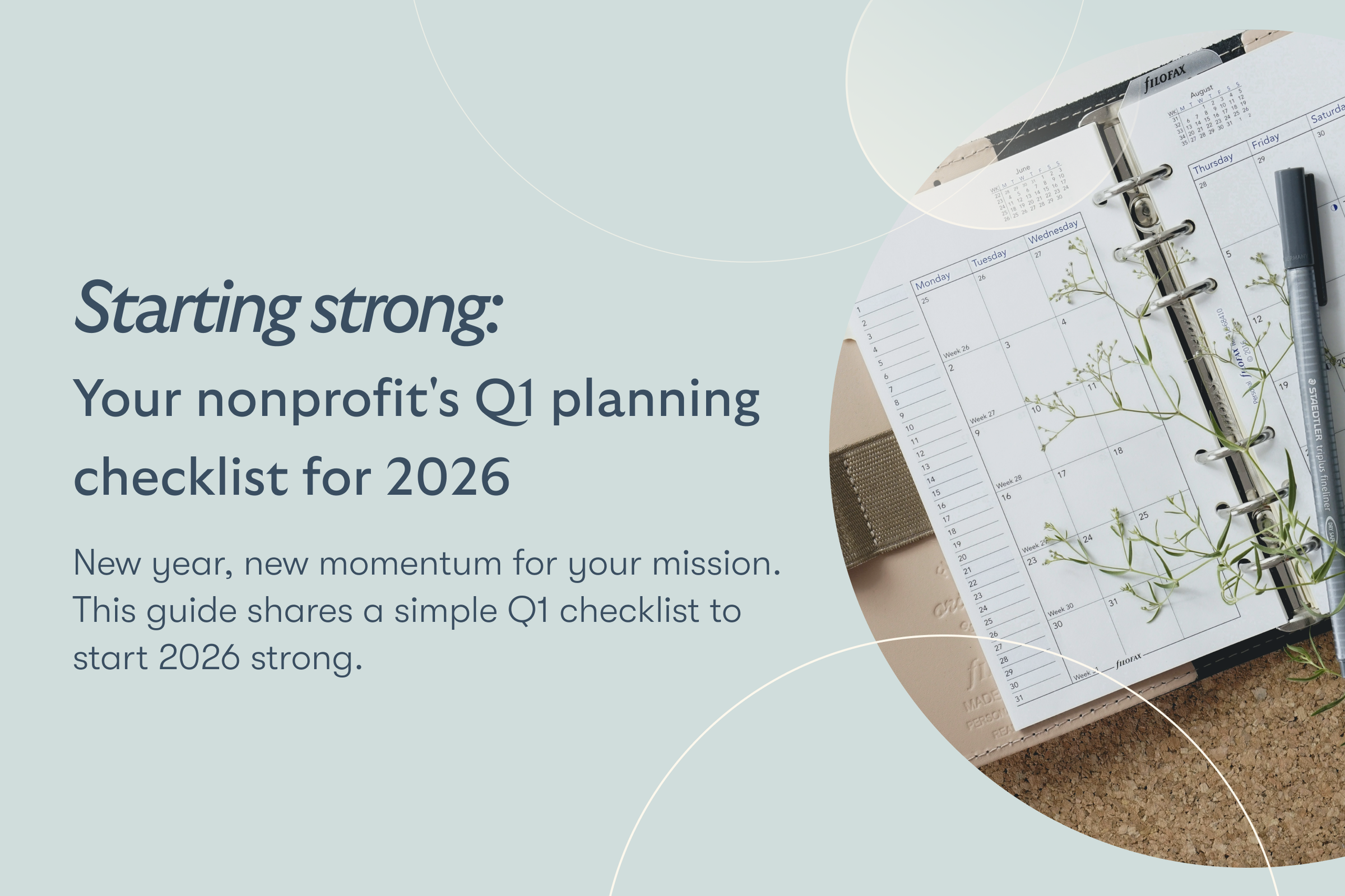
The new year gives nonprofits a fresh start, a chance to refocus and aim for greater impact. It’s a time when new goals can lead to stronger outcomes, and the energy of January can help recharge your team and strategy.
A strong Q1 plan helps your nonprofit capture that momentum and turn it into real progress. This guide offers a clear, actionable checklist to help you start 2026 on the right foot. From reviewing your 2025 data to setting SMART goals, building a budget, launching new efforts, and tracking progress, each step is designed to move your mission forward.
Analyzing 2025 performance data to inform 2026 strategy
Begin your Q1 planning with a candid look back at 2025. You can’t set realistic goals for next year without an honest review of last year’s performance.
Gather your fundraising data, program outcomes, and donor metrics from 2025. Key indicators to assess include total funds raised versus your target, number of donors gained or lost, donor retention rate, and program impact measures. For example, if your retention lagged or declined in 2025, flag this as an area for improvement.
Also, compare your new donor acquisition to retention: acquiring new donors can cost five times more than keeping an existing donor, so analyze whether your 2025 stewardship efforts paid off. Identify what worked well (a successful campaign or grant, programs that exceeded goals) and what fell short.
Top nonprofits are highly data-driven. By reviewing your 2025 performance now, you can identify adjustments to your 2026 strategy. As the saying goes, what gets measured gets managed.
Setting SMART goals for fundraising, programs, and donor engagement
With your 2025 performance in mind, the next step is to set clear goals for 2026. Adopt the SMART framework – ensure each goal is Specific, Measurable, Achievable, Relevant, and Time-bound
For fundraising, define exactly what you plan to raise in Q1 and by year-end 2026 (e.g., “Raise $50,000 in Q1 and 10% more overall than in 2025”). Break that down into monthly or campaign targets so progress is measurable.
Do the same for program objectives. For instance, a food bank might aim to distribute 15% more meals in Q1 compared to last year. Donor engagement goals might include improving your donor retention rate by a few percentage points, acquiring a certain number of new donors, or growing your email subscriber or volunteer list.
Make sure each goal is realistic (ambitious yet attainable with your resources), has a concrete metric, and a deadline. Remember, writing down goals and tracking progress increases success rates by over 40%
Building a realistic Q1 budget and resource allocation plan
A solid Q1 (and annual) plan isn’t complete without a realistic budget. In planning for Q1 2026, build a realistic budget that reflects both your ambitions and the economic realities.
Nonprofits are entering 2026 in a volatile environment: in one recent sector survey, 80% of organizations reported significant cost increases (averaging ~14%, well above the 2.9% inflation rate).
Funding can be unpredictable as well; 29% of nonprofits experienced decreases in 2025. In addition, economic concerns are rising. In 2025, 44% of leaders said they expect the economy to get worse, up from 28% the year before.
With rising costs and uncertain funding try out the following:
- Review Q1 expenses and income projections carefully.
- Prioritize essential spending for programs and operations.
- Forecast revenue conservatively using pledged gifts, grants, and past trends.
- Align your budget with Q1 goals:
- Fund key initiatives (e.g., new programs or donor campaigns).
- Set aside money for donor stewardship (mailings, events).
- Have contingency plans in place:
- 56% of nonprofits rely on federal funding.
- Cuts have been more common than increases.
- Assess staff and tech capacity:
- Fill gaps through volunteers, cross-training, or hiring.
- Audit resources and list what’s missing (staff, tools, funds).
- Create a plan to fill those gaps via budgeting, recruiting, or quick fundraising.
Try BetterWorld’s robust suite of charity & nonprofit fundraising tools for FREE!
Key initiatives to launch in January (new campaigns, donor surveys, etc.)
The first few weeks of the year are prime time to kick-start initiatives that will build momentum. Here are key Q1 initiatives your nonprofit should consider launching in January:
- Thank your donors and share impact: Start January by expressing gratitude to the supporters who fueled your year-end campaign. This is “the perfect time to thank donors” and show them the difference their contributions made.
- Share impact and set the vision: By late January, follow up with donors with a more detailed impact update. For example, send a report or email detailing what was accomplished with funds from the holiday campaign, and what those results enable you to do in 2026.
- Encourage recurring giving: Don’t let the post-holiday pause set in. Invite donors to support you year-round. January is an excellent time to promote routine giving (monthly or quarterly donations) while recent generosity is fresh.
- Launch a donor survey: Engage your supporters by asking for their input. Sending out a brief donor survey in Q1 can help shape your new-year priorities and show donors you value their opinions.
- Plan a new engagement event: Keep the momentum going by finding ways to connect with your community in Q1. You could host a New Year's kickoff event (even a simple virtual town hall or an open house) to update supporters on what’s ahead.
Creating accountability systems and progress tracking mechanisms
Setting goals is only half the battle; accountability and tracking are what ensure those goals turn into results. Start Q1 by defining how success will be measured for each priority. Set simple KPIs, such as weekly donation totals, new donor counts, or program participation numbers, and choose tools to monitor them. While 85% of nonprofits say performance tracking improves fundraising, only 30% actually use goal‑tracking tools effectively.
Next, assign ownership. Each goal should have a clear lead, whether that’s a staff member or a department. Schedule short monthly check‑ins during Q1 to review progress, flag issues, and adjust plans. Share highlights with your board to keep leadership informed and aligned.
Accountability also extends beyond your team. Supporters value transparency. Consider sharing a brief Q1 progress update outlining wins and challenges. A short report, email update, or website dashboard can go a long way in building trust.
Finally, use data to adapt. If something isn’t working mid‑quarter, adjust it. If a tactic is outperforming expectations, invest more in it.
Kickstart 2026 – sign up and raise more with BetterWorld
Ready to start 2026 strong? Sign up for BetterWorld today and equip your organization with modern, practical fundraising tools that are seamless and easy to use. From donation pages to donor engagement features, our platform is designed to save you time and maximize your impact.
By investing a few minutes now, you’ll set your nonprofit up on a platform that can help turn those ambitious Q1 plans into reality and carry your momentum through the rest of the year.

Join 105,000+ amazing nonprofits, organizations, and fundraisers on BetterWorld

Let our FREE fundraising tools help you raise more funds with less effort