Lapsed donor reactivation campaigns: A Q4 playbook for nonprofits
Q4 is a natural time to reconnect with donors who already know your mission but have stopped giving. Year-end campaigns, GivingTuesday, and December deadlines give nonprofits timely reasons to restart the conversation.
The numbers show why donor reactivation deserves attention in Q4. Total charitable dollars grew 5.0% in 2025, but the number of donors fell 3.6%, according to the Fundraising Effectiveness Project (FEP). Overall donor retention reached only 43.3%.
Reactivation is not easy either. Data show only about 3% of lapsed donors were recaptured in 2025.
That is why a Q4 reactivation campaign should not be one generic “we miss you” email. The better approach is to identify the donors most likely to return, reconnect them with their past impact, and make the next ask relevant.
Lapsed donor reactivation at a glance
Donor segment | Q4 priority | Best approach |
Recently lapsed repeat donors | Highest | Past impact + personal ask |
Previous year-end donors | High | Show what their last gift helped |
Previous GivingTuesday donors | High | Reconnect before Dec. 1 |
Lapsed major donors | High | Personal staff or leadership outreach |
One-time donors | Medium | Reintroduce mission + specific need |
Long-lapsed donors | Lower | Low-cost test before larger investment |
Failed recurring donors | Separate workflow | Payment recovery, not a win-back appeal |
What is a lapsed donor?
A lapsed donor is someone who gave in the past but has gone beyond your organization's expected giving cycle without making another gift.
There is no single lapse window that works for every nonprofit. Many organizations use around 12 months, but the right definition depends on your donor patterns and campaign schedule.
If a historically annual donor is approaching their usual giving anniversary but has not officially lapsed yet, treat them as pre-lapsed. A timely stewardship message may help reconnect them before they cross your lapse window.
Why lapsed donors deserve attention in Q4
Q4 gives nonprofits a useful reason to reconnect with former supporters without making the outreach feel random.
GivingTuesday, year-end goals, matching gifts, and December deadlines all create natural moments to show what has changed since a donor last gave and invite them back.
The key is to prioritize based on past behavior. FEP data shows a major difference between first-time and repeat donors: retention was 18.9% for first-time donors and 59.3% for repeat donors. Donors with a longer giving history were even more likely to stay engaged.
For a Q4 reactivation campaign, that means your best prospects are usually donors who:
- Gave more than once
- Supported a previous GivingTuesday or year-end campaign
- Gave relatively recently
- Made larger or more consistent gifts
- Stayed engaged through email, events, or volunteering
Do not spend the same time and budget on every lapsed donor.
Start with people who already showed a stronger relationship with your nonprofit, then use their past support to make the Q4 message more relevant.
Step 1: Define who counts as lapsed
Before building your campaign, decide exactly which donors belong in it.
Review:
- Last gift date
- Number of previous gifts
- Total historical giving
- Last campaign supported
- One-time or recurring status
- Email engagement
- Event participation
- Volunteer activity
Also separate donors with failed recurring payments.
Monthly giving now accounts for a significant share of online nonprofit revenue. A failed payment can look like donor churn even when the donor never chose to leave.
Before sending outreach, clean the list too. Remove duplicates, deceased contacts, hard bounces, and people already marked as do-not-contact.
Reconcile suppression lists and respect email or SMS opt-outs and channel permissions.
Step 2: Prioritize the donors most likely to return
Do not start with one giant lapsed-donor list.
Use recency, frequency, and past value to identify the strongest opportunities.
Segment | Example | Q4 priority |
Recently lapsed loyalists | Gave 3+ times and recently stopped | Highest |
Previous year-end donors | Gave last year but not this year | High |
Previous GivingTuesday donors | Gave around Dec. 1 in past years | High |
Lapsed repeat donors | Gave at least twice | Medium-high |
One-time donors | One previous gift | Medium |
Long-lapsed one-time donors | No gift for 2+ years | Lower |
These should not become rigid universal rules. Adjust the bands to your own donor history.
Two common fundraising segments can also help identify Q4 opportunities:
- LYBUNT: Last Year But Unfortunately Not This Year
- SYBUNT: Some Year But Unfortunately Not This Year
LYBUNT donors are often especially relevant for year-end reactivation because they supported you recently but have not yet returned this year.
SYBUNT donors may need more context or a lower-cost test. In both cases, prioritize by recency, frequency, and past value instead of treating the label alone as a reason to contact them.
Step 3: Look for context behind the lapse
You usually cannot know why a donor stopped giving unless they tell you.
Recent donor research still gives useful context. In a 2026 survey of 2,006 donors, people who had stopped supporting a nonprofit most often cited:
- 42.9% — they could no longer afford to give
- 22.7% — they no longer felt connected to the organization's work
- 15.5% — they questioned how their money was being used
- 13.3% — they were not asked to give again
- 9.9% — they did not understand the impact of their previous gift
- 6.4% — they were not thanked (Neon One)
These figures show that donor lapse can come from very different causes. Financial pressure needs a different response from weak stewardship, unclear impact, or simply not being invited to give again.
Do not assign any of these reasons to an individual donor without evidence.
If you need more context, ask directly. A short survey, personal email, or phone conversation can help you learn what the donor wants to hear about, how often they want to hear from you, and what would make future communication more relevant.
The goal is to avoid building a lapsed donor reactivation Q4 campaign around assumptions.
Step 4: Warm lapsed donors before making another ask
One of the biggest mistakes in donor reactivation is making the first contact another fundraising request.
Try one relationship-building touch first, especially for higher-priority donors.
You could send:
- An update on what their previous gift helped accomplish
- A short impact story
- Results from the campaign they supported
- A simple donor survey
- A personal thank-you
- A message asking what part of the mission matters most to them
There is promising evidence for this approach. Second Harvest Food Bank tested sending an impact-focused email to lapsed donors before its year-end fundraising campaign.
The group that received the email had a 34% higher response rate and gave 14% more on average than the group that did not receive it.
Step 5: Write a reactivation message that feels personal
Once you have warmed the donor with an impact update or thank-you, the reactivation ask should build on their actual history with your organization.
Use details you can verify, such as the campaign they supported, when they gave, or the program connected to their gift.
Example
Stewardship message:
“Last December, you supported our winter food program. Thanks to donors like you, we were able to provide grocery boxes to 1,200 local families.”
Follow-up reactivation ask:
“We are preparing for this winter’s distribution now, and 430 families are already registered for support. Since you helped make this program possible last year, we wanted to invite you to be part of it again. A gift of $50 can help provide groceries for one family.”
Do | Avoid |
Reference a campaign or program they supported | Generic “we miss you” language |
Use verified details from their giving history | Pretending you know why they stopped |
Connect past support to the current need | Repeating your full mission statement |
Use one clear CTA | Several competing asks |
Make the return easy | Making them search for how to give |
Step 6: Use more than one channel
Email can carry much of your Q4 campaign, but it should not automatically be your only channel.
Consider:
- Direct mail
- Phone
- SMS when you have proper consent
- Personal staff or board outreach
- Appropriate digital retargeting
Channel investment should match donor value.
Direct mail is a good example. M+R reports that nonprofits sent lapsed donors an average of eight mailings in 2025, but direct mail to lapsed audiences returned an average of $0.90 for each $1 spent, compared with $4.51 for active donors.
That does not mean you should avoid mail. It means you should be selective about which lapsed donors receive the more expensive outreach.
Step 7: Treat a reactivated donor differently afterward
A recovered gift is not the finish line.
If the donor immediately falls back into your standard mass-email stream, you may lose the chance to rebuild the relationship.
Create a short next-step plan:
- Send a personalized thank-you.
- Report the impact of the renewed gift.
- Welcome them back.
- Invite them to an appropriate event or volunteer opportunity.
- Offer recurring giving when it fits.
- Follow up again after the campaign.
Monthly support may be especially useful for donors who want an easier ongoing commitment. M+R found that 71% of new sustainers were still active after one year in its 2025 online fundraising data.
BetterWorld also has more guidance on keeping recurring donors engaged after they sign up. Read BetterWorld's monthly donor retention guide
Step 8: Measure reactivation separately
Measure lapsed-donor reactivation separately from your general Q4 fundraising results. Otherwise, you will know how much the campaign raised but not which donor groups or outreach methods actually brought people back.
Start with three core numbers:
- Lapsed donors contacted
- Lapsed donors who gave again
- Revenue from those reactivated donors
Then calculate:
Reactivation rate = Reactivated donors ÷ Lapsed donors contacted × 100
For example, if you contact 1,000 lapsed donors and 45 make another gift:
45 ÷ 1,000 × 100 = 4.5% reactivation rate
If those 45 donors give $6,750 in total:
$6,750 ÷ 45 = $150 average reactivated gift
Break the results down by segment
The overall rate can hide what actually worked.
For example:
Segment | Contacted | Reactivated | Reactivation rate |
Previous year-end donors | 300 | 24 | 8.0% |
Lapsed repeat donors | 400 | 16 | 4.0% |
Long-lapsed one-time donors | 300 | 5 | 1.7% |
In this example, previous year-end donors clearly deserve more attention in the next Q4 campaign, while the long-lapsed group may not justify the same level of time or spending.
Raise more. Keep more.
Do more good.
Raise more with BetterWorld Compare channels too
If you used email, direct mail, phone, or personal outreach, track each separately.
You may find that email works well for recently lapsed donors while personal calls produce better results with former major donors. Compare reactivation rate, revenue, and campaign cost before deciding where to invest next time.
Track what happens after the first recovered gift
A donor making one comeback gift is useful. A donor who stays active is more valuable.
Check again after the campaign to see:
- How many reactivated donors gave a second time
- How many started recurring gifts
- How many stayed engaged into the next year
Use those results to improve your next reactivation campaign.
Q4 lapsed donor reactivation timeline
Timing | Action |
Early October | Define lapse and clean donor data |
Mid-October | Segment and prioritize donors |
Late October | Send non-ask stewardship |
Early November | Start personal priority outreach |
Mid-November | Introduce the year-end need |
Late November | Reconnect previous GivingTuesday donors |
Dec. 1 | Run targeted GivingTuesday reactivation |
Dec. 2–15 | Follow up and shift to year-end |
Dec. 16–31 | Run final segmented win-back appeals |
January | Steward and measure reactivated donors |
Bring lapsed donors back into the conversation with BetterWorld
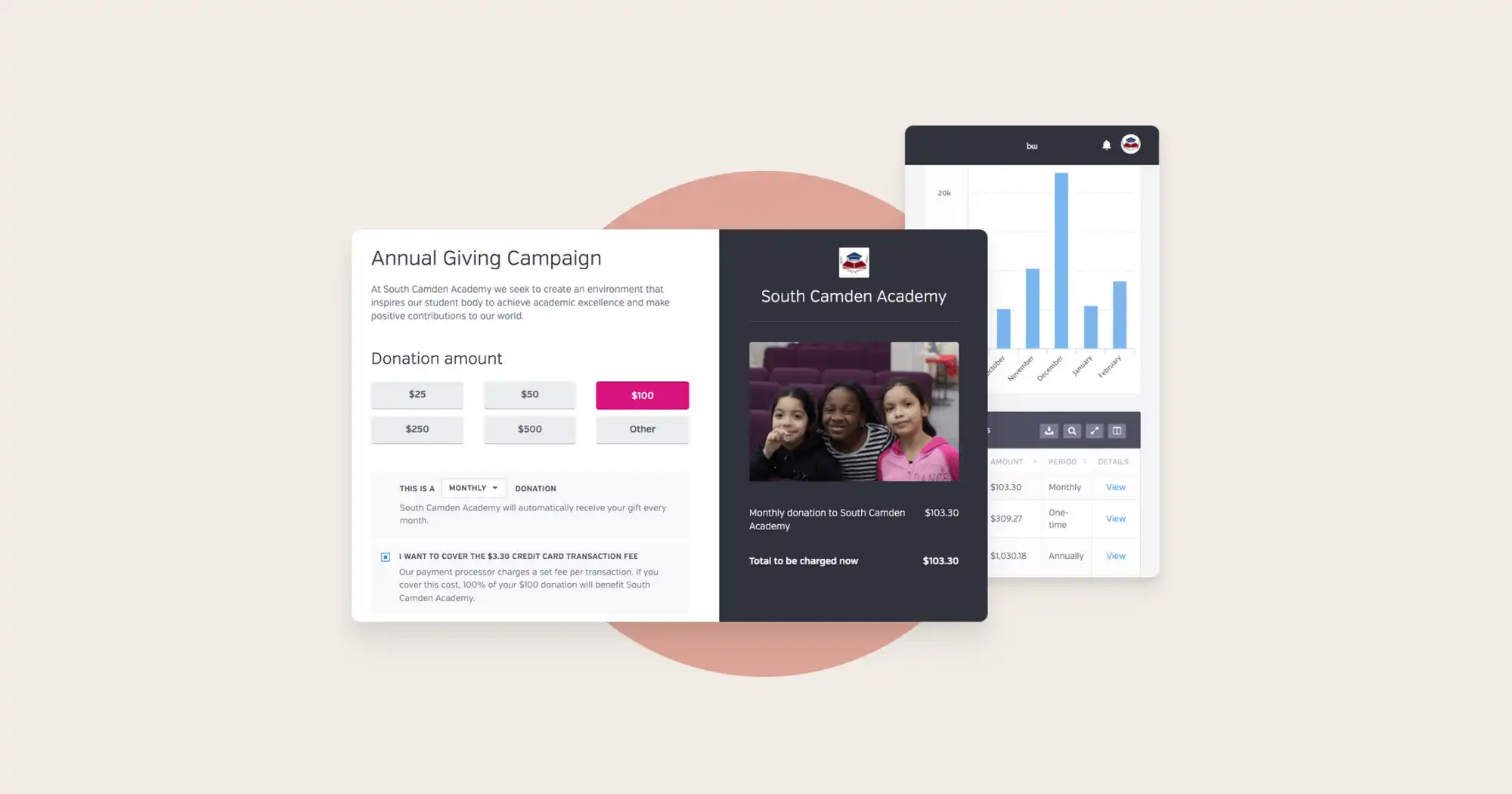
BetterWorld's donor management tools let nonprofits review a supporter's past donations and other participation history in one donor profile. That context can help nonprofit organizations understand previous involvement before planning Q4 outreach.
For recurring donors, BetterWorld also lets donors or nonprofit teams manage payment methods, donation amounts, frequencies, pauses, and reactivation. That can help separate genuine donor lapse from recurring gifts interrupted by payment or account issues.
Request a demo or sign up now.
FAQs
1. What is a lapsed donor?
A lapsed donor is someone who previously donated but has gone beyond your organization's expected giving cycle without making another gift.
2. How long before a donor is considered lapsed?
Many nonprofits use around 12-13 months, but there is no universal rule. Base your lapse window on your organization's normal giving cycle.
3. What is donor reactivation?
Donor reactivation is the process of reconnecting with lapsed donors and motivating some of them to give again.
4. Which lapsed donors should nonprofits contact first?
Start with recently lapsed donors who gave multiple times, previous year-end or GivingTuesday donors, and donors with stronger historical relationships.
5. What is a good donor reactivation rate?
There is no universal target. FEP reported an overall lapsed-donor recapture rate of about 3% in 2025, but results can vary greatly by donor segment.
6. When should nonprofits run reactivation campaigns?
Reactivation can happen year-round. Q4 is especially useful because GivingTuesday and year-end fundraising provide natural reasons to reconnect.
7. What should you say to a lapsed donor?
Thank them for their previous support, show what it helped accomplish, explain a current need, and give them one simple way to reconnect.
8. How do you keep reactivated donors from lapsing again?
Thank them quickly, send relevant impact updates, personalize future communication where possible, and create a clear stewardship plan after the renewed gift.