How to run a low-carbon fundraising event without raising costs
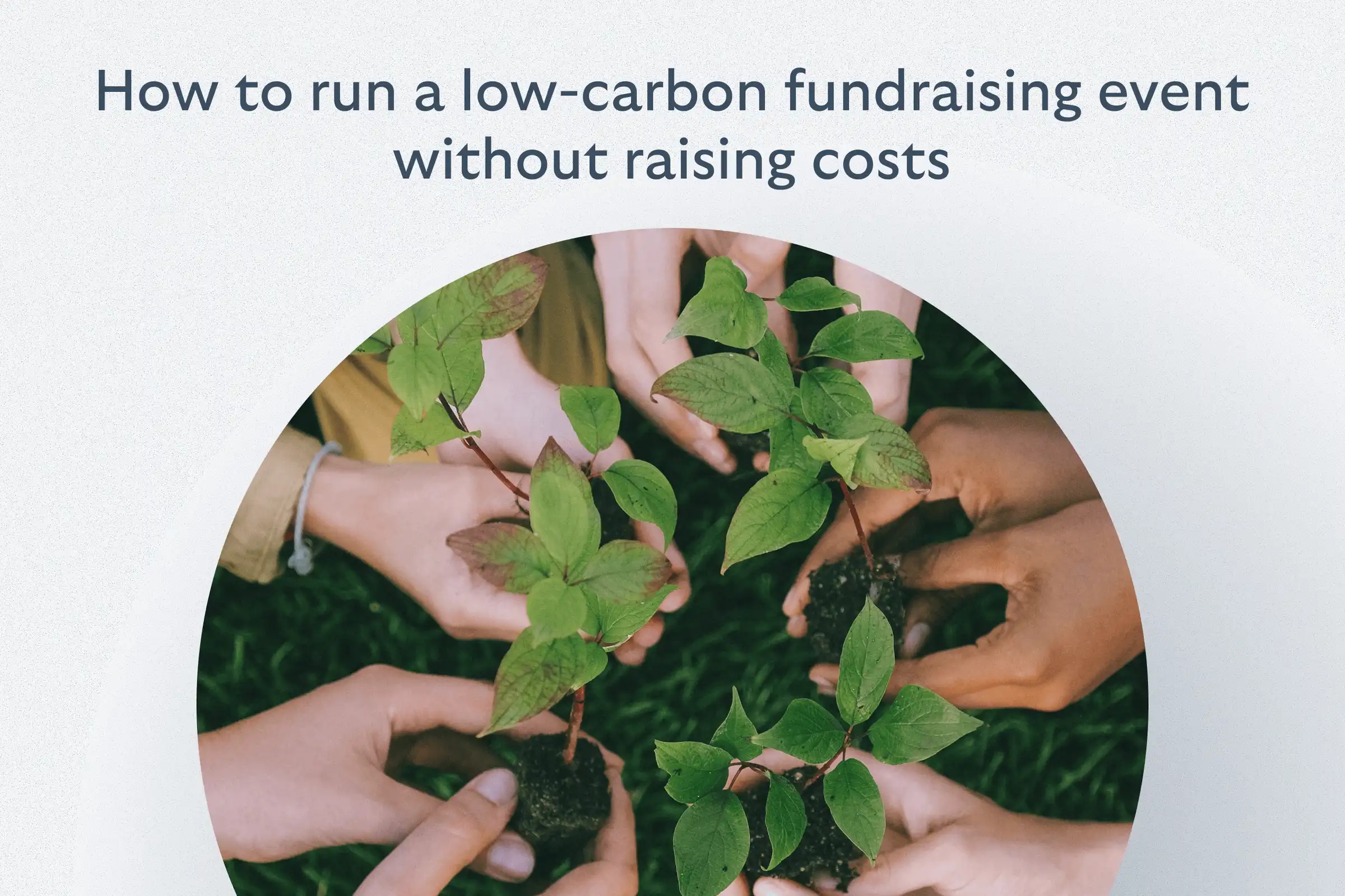
Your fundraising event should raise money for your cause, not create unnecessary waste or extra expenses. Yet travel, printed materials, disposable decorations, and leftover food can increase both your event’s carbon footprint and its cost.
The numbers show why this matters. According to the U.S. Energy Information Administration, transportation produced 1.87 billion metric tons of energy-related CO₂ emissions in 2025. ReFED’s 2026 report also found that 29% of the U.S. food supply became surplus in 2024, worth $380 billion.
The good news? Low-carbon fundraising events don't have to cost more. Choosing a nearby venue, using digital invitations, reusing supplies, and planning food portions carefully can reduce waste while keeping expenses down.
Here’s how your nonprofit can plan a low-carbon fundraising event that saves money, reduces environmental impact, and still delivers a great experience for supporters.
Low-carbon fundraising event planning at a glance
Priority | Practical change | Budget check |
Travel | Choose a venue near supporters; offer remote giving | Compare venue, transportation, and technology costs |
Food | Quote plant-based meals and confirm attendance | Compare full catering prices, including service |
Materials | Reuse signs and skip automatic giveaways | Include storage, delivery, and cleaning |
Registration | Use digital tickets and online auction listings | Count software and payment-processing fees |
Waste | Prevent surplus; arrange recovery for leftovers | Confirm collection and staffing charges |
1. Set a budget limit and protect your fundraising goal
Use your last similar event as a baseline. For a first event, build a conventional budget before comparing alternatives.
Track two results:
- Net funds raised: event revenue minus event expenses.
- Resource use: travel, meals, energy, purchased materials, and waste.
Include paid staff time, vendor charges, delivery, taxes, and cleanup. Track volunteer hours separately so a cheaper plan does not hide an unreasonable workload.
Apply one spending rule: any added sustainability expense must fit within documented savings elsewhere.
For example, removing $600 in automatic giveaways could fund $150 in added waste services while leaving $450 for your mission. These are planning figures, not industry averages.
2. Choose a venue that reduces transportation and energy costs
Compare venues based on where your expected guests live. A donated rural venue can create longer trips and extra transportation costs. A neighborhood community center may already have tables, dishes, electricity, and accessible facilities.
Before booking:
- Compare three venues using total costs, including rentals and transportation.
- Check public transit routes and service hours.
- Share an optional carpool signup.
- Ask distant speakers to join remotely.
- Let supporters donate or bid online without traveling.
What could fewer car trips save? The EPA estimates about 400 grams of tailpipe CO₂ per mile. If 20 avoided car trips each cover 30 round-trip miles, that is approximately 240 kilograms of avoided tailpipe CO₂: 20 × 30 × 0.4 kg.
This estimate excludes fuel production and any replacement travel or digital activity. For carpooling, count vehicles removed from the road, including detours.
Remote participation can help, but the format matters. A study found that switching conferences to fully virtual events could reduce their carbon footprint by 94% and energy use by 90%. That result is specific to the study, not a forecast for a local fundraiser.
Keep the in-person experience when it serves your donors. Add remote giving before committing to an expensive broadcast.
3. Plan a lower-carbon menu and buy the right amount
Request two comparable catering quotes: your usual menu and a satisfying plant-based option, such as bean chili, lentil curry, or vegetable-and-tofu bowls. Compare the same portion sizes, staffing, tableware, and service level.
A study of six university events found that plant-based defaults reduced the meals’ estimated environmental impacts by roughly 45%–46%, across measures including carbon emissions. Guests could still choose meat. The research does not establish catering cost savings.
Start with these steps:
- Ask attendees to confirm participation and dietary requirements.
- Share updated attendance numbers with the caterer before the final ordering deadline.
- Ask the caterer to use smaller serving dishes and refill them as needed.
- Avoid placing unnecessary bread, sauces, and condiments on every table.
- Arrange for safe, unused food to be donated through a local food rescue organization.
The U.S. Food Waste Pact's free toolkit recommends limiting catering orders to roughly 3%–5% above confirmed counts where appropriate.
Ask for local ingredients when they fit the menu and price. Treat “local” as a sourcing detail, not proof that a meal has lower emissions.
The 2026 U.S. Food Waste Pact pilot found that 42% of food prepared for buffets went uneaten across the events studied.
4. Reuse what you have and stop buying unwanted items
Start with an inventory of signs, linens, tableware, display stands, and decorations.
Use signs without dates so they can serve future events. If possible, borrow supplies from a partner nonprofit. Replace individual gift bags with a shared display showing what donations support.
For auction items, favor options that avoid new production or long-distance shipping: donated secondhand goods, local services, or nearby experiences. A travel package still creates travel emissions even if its voucher is digital.
Ask sponsors to fund an existing need, such as catering or venue costs. Offer recognition on the event page and shared signs rather than adding branded merchandise.
For reusable dishes, include washing, handling, transportation, and breakage in the quote.
Avoid purchasing reusable items that will never be used again. Compare the cost of borrowing, renting, and buying before making a decision.
5. Move tickets and auction information online
Use email invitations, digital tickets, online auction catalogs, and a shared donation link. Keep a small supply of printed information and offer staff help for guests who need it.
BetterWorld’s event tools support online ticket sales, QR code tickets, and staff-assisted check-in. Our fundraising tools also include online auctions and donation forms at zero cost to your nonprofit.
This can help your team reduce printed materials while keeping giving available to supporters at home. Digital tools still use energy; their value here comes from replacing specific purchases or trips.
Check venue Wi-Fi and test the giving process before event day. Include all technology costs in the budget.
6. Match waste services to your actual needs
The EPA’s Wasted Food Scale places prevention, donation, and upcycling among the most preferred food-management options.
Plan food recovery with your caterer and a receiving organization before the event. Confirm acceptable food, safe handling, storage, pickup, and responsibilities.
For remaining waste:
- Ask the hauler which materials it accepts.
- Put labeled waste stations beside food service areas.
- Assign someone to help guests sort items.
- Request weights or collection records after pickup.
Do not pay extra for compostable cups or plates without a collection plan. The EPA notes that compostable serviceware generally needs commercial processing, and individual facilities may not accept it.
Use a venue with existing power and equipment when practical. Compare electricity, generator, delivery, and setup charges before choosing an outdoor location.
7. Offer virtual or hybrid participation
Not every supporter needs to attend in person to contribute.
For example, an organization hosting a dinner could allow remote supporters to bid in its silent auction or contribute during a live fundraising appeal.
Other practical formats include virtual auctions, online raffles, online challenges, and peer-to-peer campaigns.
These formats can reduce travel and physical event expenses. However, nonprofits should compare technology costs, staff time, and expected donations before replacing an established event.
Raise more. Keep more.
Do more good.
Raise more with BetterWorld Sample budget: a 200-person fundraising event
The following example uses expected prices to show how small changes can affect the budget.
Selected expense | Original plan | Revised plan |
Catering: $22 vs. $20 per guest | $4,400 | $4,000 |
Printed materials | $250 | $60 |
Decorations and signs | $450 | $150 |
Automatic giveaways | $600 | $0 |
Bottled water vs. refill service | $150 | $50 |
Waste services and sorting labor | $100 | $250 |
Selected expense total | $5,950 | $4,510 |
Expected savings: $1,440, after allowing $150 more for waste services and sorting.
The $400 catering reduction depends on obtaining the assumed quote. If both menus cost $22 per guest, savings fall to $1,040.
At unchanged revenue, expense savings increase net funds by the same amount. If a format change could reduce ticket sales or donations, compare that revenue risk before approving it.
How to measure the carbon and financial impact of your event
Nonprofits don't need an expensive carbon-accounting system to begin tracking improvements.
Start with the information already available from registration forms, invoices, and vendors.
Metric | What to track |
Attendee travel | Estimated vehicle miles and transportation methods |
Catering | Meals ordered, meals served, and pounds of leftover food |
Materials | Printed items and disposable products avoided |
Waste | Pounds donated, recycled, composted, or discarded |
Expenses | Actual spending compared with the original budget |
Fundraising results | Total raised, total expenses, and net funds raised |
Compare similar events. Report both total emissions and emissions per attendee if you calculate a footprint. Keep the same calculation method and explain missing data.
Do not turn pounds of waste into a carbon reduction claim without a suitable method. For a first event, establish a baseline.
A useful donor update states what changed: “We removed automatic gift bags, reused our signs, and spent $1,440 less on the selected budget items.” Use that figure only if your actual records support it.
Low-carbon fundraising event checklist
Use this checklist before your next fundraiser.
- Select a centrally located, accessible venue.
- Offer public transit, carpool, and remote participation options.
- Send digital invitations and tickets.
- Confirm guest numbers before placing catering orders.
- Ask caterers about plant-based meals and smaller portions.
- Reuse decorations, furniture, and event signs.
- Replace printed auction catalogs with mobile bidding.
- Arrange food donation and recycling in advance.
- Track event expenses, waste, travel, and fundraising revenue.
- Share verified results with supporters after the event.
Keep more of your event budget for your mission
BetterWorld brings event ticketing, auctions, donation forms, and other fundraising tools into one platform. Your team can manage registration and giving while reducing the need for printed tickets and catalogs.
The Free plan has a $0 subscription and 0% platform fee.
Sign up now to start planning your next low-carbon fundraiser.
FAQs
What is the cheapest way to make a fundraising event more sustainable?
Start by reducing purchases. Digital invitations, borrowed decorations, accurate catering orders, and existing venue equipment can reduce both costs and waste.
Do low-carbon fundraising events cost more?
Not necessarily. They can cost less when organizations reduce food waste, printing, transportation needs, and unnecessary rentals. Savings depend on the event.
What types of fundraising events have a low carbon footprint?
Virtual auctions, local fundraising walks, online challenges, peer-to-peer campaigns, and small community events can be lower-carbon alternatives to large events requiring extensive travel and materials.
Can a fundraising gala be low-carbon?
Yes. Existing venues, digital auction bidding, lower-emission meals, reusable decorations, and accessible transportation options can reduce a gala's environmental impact.