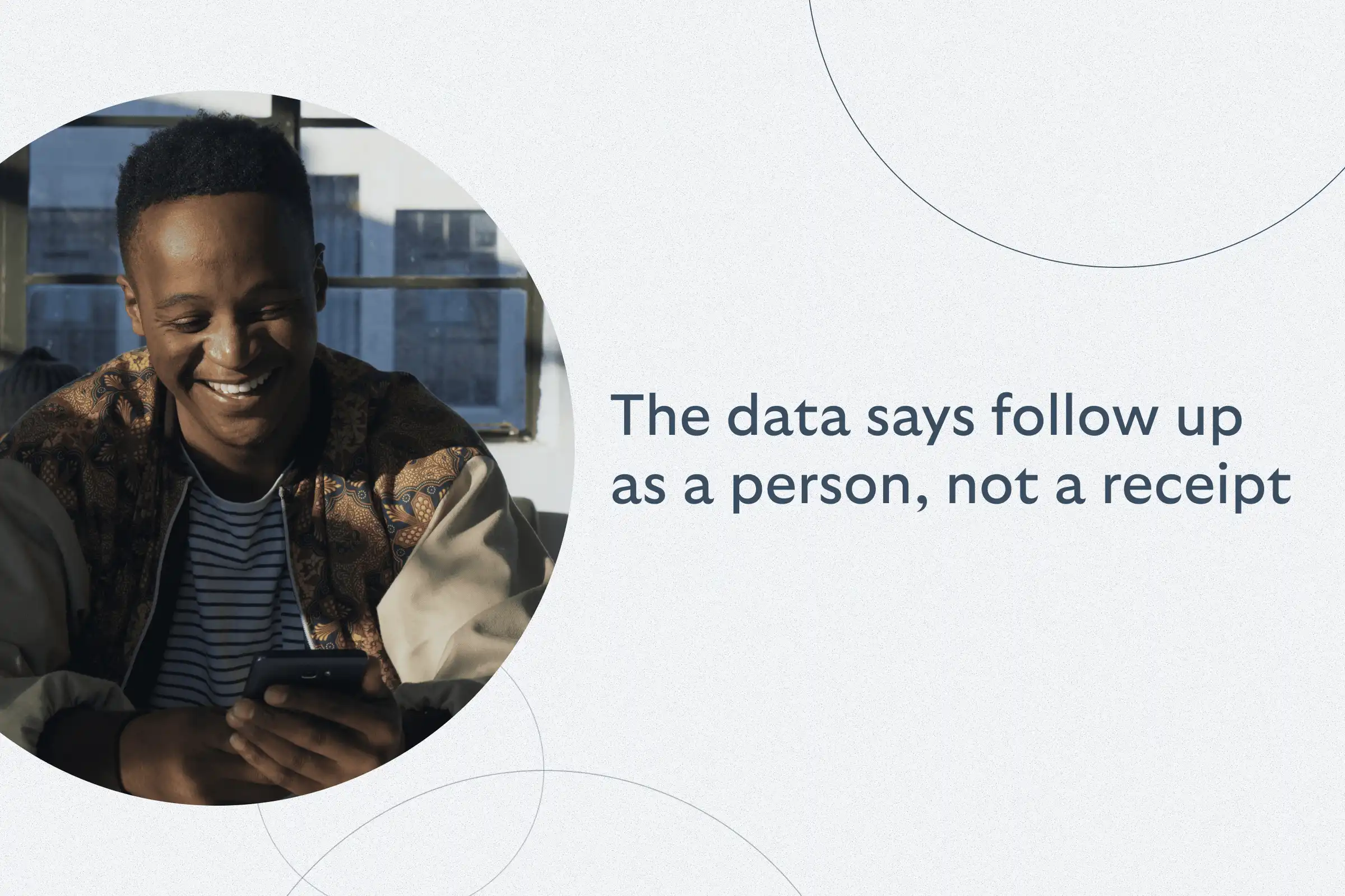
The data says follow up as a person, not a receipt
Nearly every donor wants to be thanked, and most of them are being thanked badly. In BetterWorld's 2026 survey of over 800 donors, 89 percent said a thank-you is very or pretty important to them, yet only 42 percent said the thank-yous they had recently received felt genuine and personal. That gap is not a failure of good intentions. Most organizations do say thank you, and many say it quickly, which matters, because 58 percent of donors expect to hear back within 24 hours of giving, if not immediately. What gets lost is the sense that a person on the other end noticed. A thank-you that reads like a receipt tells a donor their gift was processed. A thank-you that reads like a person tells them it was received and valued. Here are best practices to ensure your donors receive the appreciation they deserve.
Part one: Receipt quickly, thank personally
58% expect a thank you within 24 hours or immediately
Donors notice how long it takes to hear back. In BetterWorld’s survey, 58 percent said they expect a thank-you within 24 hours of giving, if not immediately. Speed matters, but the first message a donor receives is usually an automated receipt, and many organizations let that receipt stand in for the thank-you.
Separate the thank-you from the receipt. The automated confirmation should arrive right away and handle the practical details: the amount, the date, the tax information. But it shouldn't be the only thing a donor hears. A receipt confirms that a transaction happened; a thank-you acknowledges a person who chose to give.
Have a real person follow up within a day. A brief phone call, text, or email from someone with a name and a reply address changes how a gift feels. It doesn't need to be long or polished. Many organizations divide new gifts among staff or board members each morning so that no donor waits more than a day to hear from someone.
Leave the next ask out of the thank-you. Gratitude that arrives with a request reads as a transaction, however warmly it's worded. Let the thank-you stand on its own, and save the next appeal for later.
Part two: Make it genuine
42% say thank-yous they received felt genuine and personal.
Speed is the easier problem to solve. Sincerity is harder. Only 42 percent of donors in our survey said the thank-yous they had recently received felt genuine and personal, which means most donors are being thanked in ways that feel generic. The fix is rarely a bigger budget. It is usually a matter of attention.
Name the gift and what it will do. "Thank you for your generous support" could be sent to anyone, and donors can tell. A thank-you that mentions the specific gift and connects it to something concrete – a week of meals, a semester of tutoring, a repaired roof – shows that someone looked at what this donor gave before writing back.
Write to a person, not a list. "Dear Friend" signals a mail merge before the donor reads another word. Use their name, write the way a staff member would actually speak, and let the message come from someone specific rather than from "The Team." A donor who feels addressed is far more likely to feel thanked.
Handwrite notes for a defined group. A handwritten note is one of the few things in a donor's mailbox that cannot be mistaken for an automated message. Few organizations can write one for every gift, so choose a group – first-time donors, a particular gift level, monthly givers reaching their first anniversary – and commit to it. A practice that is sustainable will outlast an ambitious one.
Record a short, unpolished video. Thirty seconds from a staff member, filmed on a phone in the place where the work happens, often feels more personal than a carefully designed email. The lack of polish is part of the point; it shows that a real person took a moment to say thank you.
Let the people you serve say it. A thank-you from a student, a family, or a community member the gift has helped can be the most memorable message a donor receives. It should be done with their consent and in a way that preserves their dignity, so that they are speaking for themselves rather than being presented as proof of impact.
Raise more. Keep more.
Do more good.
Raise more with BetterWorld Part three: Never stop thanking
Most thank-you processes end once the first message goes out. For the donor, though, the gift is only the beginning of the story, and the organizations they remember are often the ones that keep telling it.
Report back on what the gift accomplished. A few weeks or months after a gift, send a short update on what it made possible: the program that ran, the family that was housed, the project that moved forward. It need not be a formal impact report – a brief note or a photo with two sentences will do. This is a second thank-you, and it answers the question many donors quietly carry after giving: did it matter?
Thank the people around the gift. Not every contribution arrives as a donation. Peer-to-peer fundraisers who asked their friends, volunteers who staffed an event, and supporters who gave because someone they trusted asked them all deserve recognition of their own. A fundraiser who hears what their campaign accomplished, or a first-time donor who is welcomed rather than simply processed, is far more likely to stay involved.
None of this requires a new budget line or a larger staff. It requires deciding that a thank-you is part of the work rather than an administrative step at the end of it. Donors give for reasons that are personal – a cause they care about, a person who asked, a moment that moved them – and the way an organization responds tells them whether those reasons were noticed. A receipt confirms that a gift was processed. A thank-you, sent quickly but written sincerely, and followed by word of what the gift made possible, tells a donor it was appreciated. That is the one they remember, and the one that makes them want to give again.