How to segment donors before Giving Tuesday and year-end appeals
Your nonprofit sends the same Giving Tuesday and year-end email to everyone. A first-time donor receives a request to “give again,” a monthly donor gets asked to start supporting you, and someone who donated yesterday receives another urgent appeal.
The problem isn't your cause. It's that these donors have different relationships with your organization.
Donor segmentation helps you decide who to contact, what to say, and when to hold back. It doesn't require a large database or a complicated system. It requires clean records, clear groups, and an outreach plan.
Donor segmentation at a glance
Segment by | What it tells you | Example use before year-end |
Giving behavior | How often, how recently, and how much someone donates | Thank a first-time donor differently from a repeat donor |
Demographics | Relevant self-reported characteristics, such as age range or language preference | Offer age-appropriate volunteer options, accessible formats or language choices where useful |
Geography | Where a supporter lives or works | Invite nearby donors to an event or show local impact |
Interests and values | Causes, programs, and outcomes a donor says matter to them | Share the program update that matches their stated interest |
Engagement | How someone participates beyond gifts | Invite volunteers or event attendees to take a next step |
Communication preference | How and how often someone wants to hear from you | Respect email, mail, text, and contact preferences |
These categories can overlap. One donor might be a first-time giver, live in your service area, and support a specific program. Use the overlap when it changes the message or action you offer.
What is donor segmentation?
Donor segmentation is the practice of grouping supporters by shared traits or actions that affect how your nonprofit should communicate with them. A useful segment leads to a different message, ask, channel, timing, or stewardship step.
A useful segment helps you answer a practical question:
- What should this supporter hear from us?
- Which program or result might matter to them?
- What ask makes sense for their giving history?
- Which channel and timing fit their preferences?
Segmentation is not a judgment about a donor’s worth. It is a way to match outreach to a person’s relationship with your organization.
A local volunteer, a monthly donor, and a first-time online donor may all care about the same mission, but they may need different context and next steps.
What types of donor segmentation should nonprofits use?
Start with the data that you can trust and act on. Most nonprofit organizations can begin with giving behavior, then add interests, geography, engagement, and communication preferences.
1. Behavioral segmentation: start with giving history
Behavioral data is often the best starting point because it records what people have actually done with your organization. Review:
- Recency: When was the donor’s last gift?
- Frequency: How many gifts have they made, and on what schedule?
- Amount: What is their typical or most recent gift?
- Campaign: Which appeal, event, or program led to the gift?
- Engagement: Have they volunteered, attended an event, shared a campaign, or opened a relevant email?
These fields can create practical groups: first-time donors, repeat donors, monthly donors, lapsed donors, Giving Tuesday donors, event donors, and donors who support a specific program.
Use your own definition of “lapsed” and write it down. For example, you might define a lapsed donor as someone who gave in a prior year but has not given in the last 12 months. The right window depends on your giving cycle.
2. Demographic segmentation: use only when it changes the experience
Demographic information can help you make outreach easier to understand or access.
A donor’s preferred language, for example, can guide the language of an appeal. Age range may help an organization choose accessible formats for a specific program, but it should not be used to assume someone’s comfort with technology or preferred channel.
Collect only details that have a clear purpose. Do not use demographic categories as a shortcut for deciding who is generous, loyal, or likely to give. Use giving history and direct donor input for those decisions.
3. Geographic segmentation: connect local supporters to local impact
Location can help a nonprofit make an appeal more specific.
A food bank might invite nearby supporters to a volunteer shift, while showing out-of-area donors how their gifts support regional distribution. A statewide organization may tailor an update by county or service area.
Keep geographic segments simple. ZIP code, county, or service region is often enough. Check for missing or old addresses before sending event invitations or location-specific appeals.
4. Psychographic segmentation: learn what supporters care about
Psychographic segmentation groups donors by interests, values, or motivations.
For a nonprofit, the safest source is what a person has chosen to tell you: a program they selected on a form, a reason they gave in a survey, or a cause area they have supported.
Use this information to shape the story and impact details, not to label people. A donor who supports an animal rescue’s medical fund may appreciate a treatment update. That does not mean you should infer their politics, religion, income, or other private beliefs.
5. Communication preference
A donor’s communication preference is a useful segment in its own right.
Record whether someone wants email, mail, text messages, event invitations, or updates about a certain program. Keep opt-outs and channel preferences current.
This also helps your team avoid sending the same appeal through every channel at once.
6. Add lifecycle and engagement segments
Some of the most useful groups are based on where someone is in their relationship with your nonprofit:
- First-time donors: Need prompt thanks, a clear impact update, and a thoughtful next step.
- Repeat donors: Need to see how continued giving builds on prior support.
- Monthly donors: Need recognition for reliable support and a clear explanation before any extra ask.
- Lapsed donors: Need a reason to reconnect and a simple way to resume giving.
- Event or peer-to-peer supporters: May need follow-up tied to the experience or campaign they joined.
- Volunteers and advocates: May welcome a choice of ways to help, including giving, sharing, or volunteering.
- Major-gift prospects: May need a personal conversation from a relationship manager, based on known history and context.
Do not let a campaign label replace the donor relationship. A “Giving Tuesday donor” may also be a monthly donor, volunteer, and repeat year-end supporter.
Keep the underlying facts available so your team can coordinate outreach.
How can a nonprofit collect useful donor data?
You do not need to ask every supporter to complete a long profile.
Start with the data produced by normal fundraising and program work, then ask a small number of optional questions when the answer will improve the donor experience.
1. Review the information you already collect
Pull a basic report from your donation platform, CRM, event tool, and email system. Look for gifts, dates, amounts, recurring status, campaign source, program designation, attendance, volunteer activity, and communication preferences.
Match records using a consistent donor ID or email, and check for duplicate profiles before creating lists.
2. Add a few optional, purpose-based questions
Use a donation form, event registration, welcome email, or short survey to ask questions such as:
- Which program or issue would you like to hear about?
- How would you prefer to receive updates?
- What motivated you to support us today?
Explain why you are asking. Keep the gift form short, and let people skip questions that are not needed to complete a donation.
3. Use engagement as a clue, not a complete profile
Email clicks, event attendance, volunteer shifts, and campaign shares can point to a topic someone may care about. They do not prove what that person believes or what they can afford.
Use engagement to choose a relevant follow-up, then give donors a simple way to correct or update their preferences.
Raise more. Keep more.
Do more good.
Raise more with BetterWorld 4. Keep a clear, usable record
For each field, record its source and last-updated date. Mark whether a preference is donor-reported or inferred from activity.
Make one system the main record for contact details, opt-outs, gift history, and segment membership. Limit staff access to what they need for their work.
A simple donor data checklist
Before building a segment, check:
- Is the data accurate and recent enough to use?
- Do we know where it came from?
- Does it change the message, channel, timing, or follow-up?
- Would the donor understand why we used this information?
- Have we checked consent, opt-outs, and contact preferences?
- Can staff keep the data updated after the campaign?
How to build donor segments before year-end
Use this six-step process to get from a donor file to a usable campaign plan:
- Choose a goal. Decide if you need to bring back lapsed donors, convert first-time donors, renew monthly support, or increase participation in a program.
- Set a time window. State which gift dates and engagement periods count. Use the same rule across reports.
- Pick a few fields. Start with three to five fields that can change the outreach, such as last gift date, gift type, program interest, ZIP code, and email preference.
- Create manageable groups. Combine small groups if they would receive the same message. Build a separate group only when you have a distinct next step.
- Check overlap. A person may fit several segments. Choose a priority rule, such as honoring monthly status first, then suppressing anyone who gave after the appeal list was created.
- Assign an owner and measure results. Decide who updates the list, sends the message, handles replies, and records gifts or opt-outs.
How should nonprofits use donor segments for Giving Tuesday?
Giving Tuesday is a focused opportunity to invite supporters to act. For 2026, the date is December 1. Build segments that help your team decide who to contact, what to say, and what next step to offer.
Segment | Giving Tuesday message or action |
First-time donors from this year | Thank them for their first gift, share a specific result, and invite them to stay involved |
Repeat donors | Recognize their continued support and show what another gift can help do |
Lapsed donors | Briefly reconnect them with the mission and explain what has changed since their last gift |
Recurring donors | Thank them for dependable support; invite an extra gift only when it fits your campaign and their preferences |
Event participants and volunteers | Show how their time or participation supported the work; offer a clear way to take part again |
Program-specific donors | Share an update from the program they chose to support |
Major or mid-level donors | Use personal outreach when staff capacity allows; share a relevant goal or outcome |
The story should change with the segment, but keep the core campaign consistent. Use one clear goal, one donation page, and a specific explanation of what gifts can help fund.
Don’t assume every supporter wants to give money. Giving Tuesday also recognizes actions such as volunteering, sharing a campaign, or offering skills. Provide a suitable option when your nonprofit can support it.
Plan a follow-up that welcomes new donors and thanks returning donors after the campaign ends.
How should nonprofits use segments for year-end appeals?
Year-end appeals can build on Giving Tuesday, but they should not simply repeat the same message. Use the weeks after Giving Tuesday to share progress, answer questions, and make an appeal that reflects the supporter’s relationship with your nonprofit.
Segment | Year-end approach |
Donors who gave on Giving Tuesday | Thank them promptly, report early results, and avoid treating the same gift as a reason for another immediate ask |
Donors who did not give on Giving Tuesday | Share a new update or need, then make a clear year-end invitation |
First-time donors | Welcome them, show what their first gift supported, and explain how to stay involved |
Repeat donors | Recognize their history and connect the year-end request to a current need |
Lapsed donors | Reintroduce the work with a concise update before asking |
Recurring donors | Thank them for ongoing gifts; explain any additional need before inviting another contribution |
Program or event supporters | Send an appeal connected to the program or event they chose |
Major or mid-level donors | Consider a personal note or call from a staff member who knows their history |
Use giving history to set a reasonable ask amount, but don’t make the donation request the entire message. Explain the need, show the likely impact, and let donors choose what works for them.
If your database has too little information for a personal ask, use a general suggested amount and avoid pretending the message is more personal than it is.
What should nonprofits measure?
Do not judge segments only by gross dollars. Compare results with the purpose of each group and the cost of reaching them. Track:
- Number of donors and gifts in each segment
- Response rate and average gift
- Revenue after refunds and processing costs, where available
- Second-gift rate for first-time donors
- Renewal or reactivation rate
- Monthly giving starts, cancellations, and upgrades
- Email delivery, clicks, unsubscribes, and complaints by segment
- Number of donors contacted more than once because lists overlapped
Review the results after the campaign, then update the record.
Use BetterWorld to organize year-end outreach
BetterWorld helps nonprofits organize donor information alongside fundraising activity. Our donor management tools support custom tags that staff can add to individual donor records.
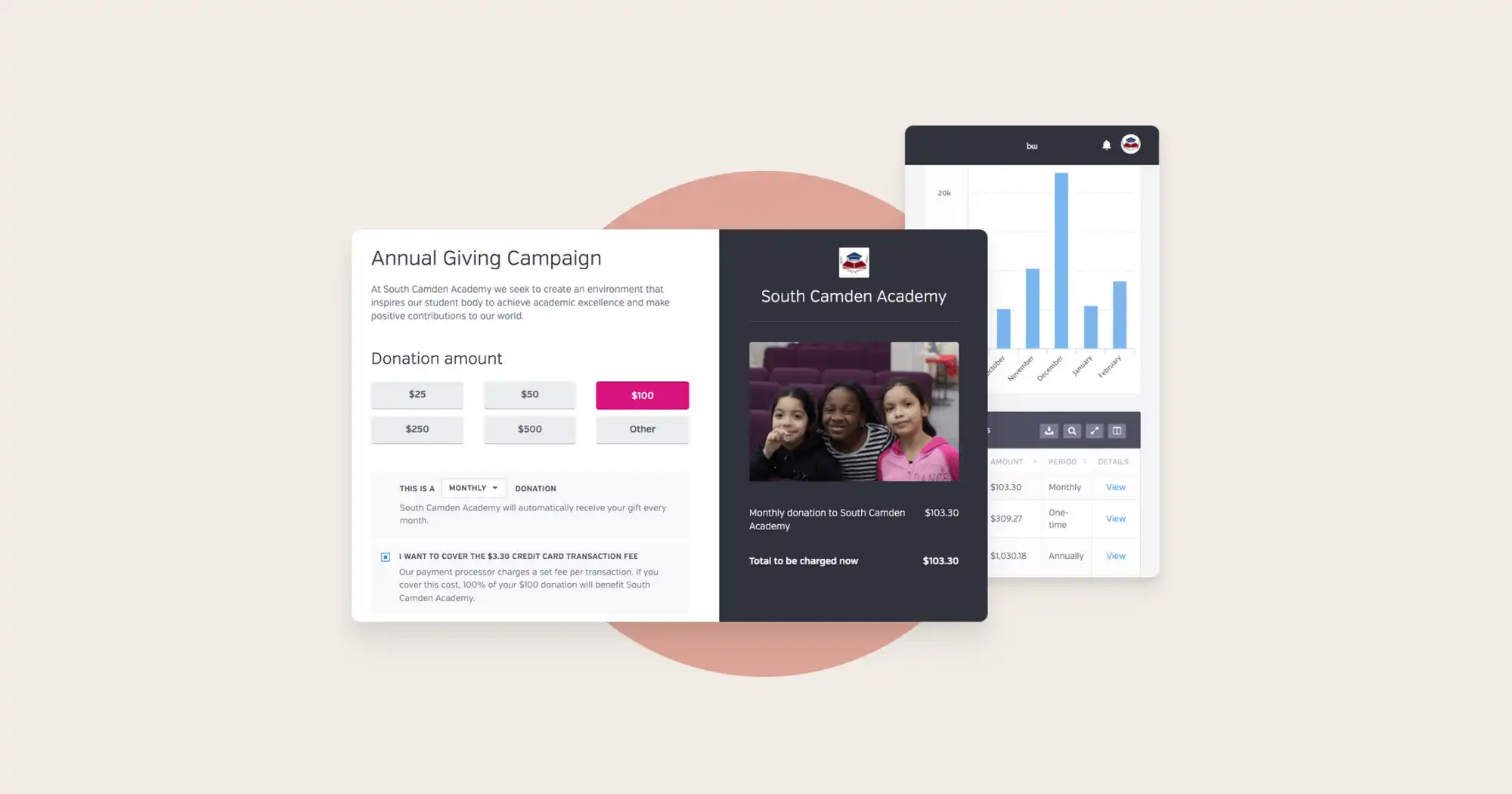
BetterWorld also offers online donation forms and fundraising tools, so supporters can act on the appeals you send.
Make your year-end outreach more relevant.
Sign up for BetterWorld for free and organize your fundraising activity in one place.
FAQs
1. What is the best way for a small nonprofit to segment donors?
Start with first-time, repeat, monthly, lapsed, and program-specific donors. Add a segment only when it changes the message, ask, channel, or follow-up.
2. How is psychographic donor segmentation different from behavioral segmentation?
Behavioral segmentation uses actions, such as gifts, event attendance, or volunteering. Psychographic segmentation uses interests, values, or motivations.
3. How often should a nonprofit update donor segments?
Review segments before each major campaign and after gifts or preference changes. Remove outdated data and check that unsubscribes and recurring gifts are recorded correctly before sending appeals.
4. Should Giving Tuesday donors get another year-end appeal?
They may, if the year-end message has a distinct purpose and acknowledges their Giving Tuesday gift. Thank them first, report what the earlier gift helped accomplish, and make the next need clear.
5. What is the difference between donor segmentation and personalization?
Segmentation groups supporters with shared traits or actions. Personalization uses those details to shape a message or next step. A segment can guide a message without adding each donor’s name or creating a fully custom appeal.