- Fundraising ideas
- Asking for donations
- Auctions
- Crowdfunding
- Events
- Fundraising
- Nonprofits
- Paddle raise
- Peer to peer
- Virtual fundraising
11 best fundraising ideas for homelessness and shelter programs
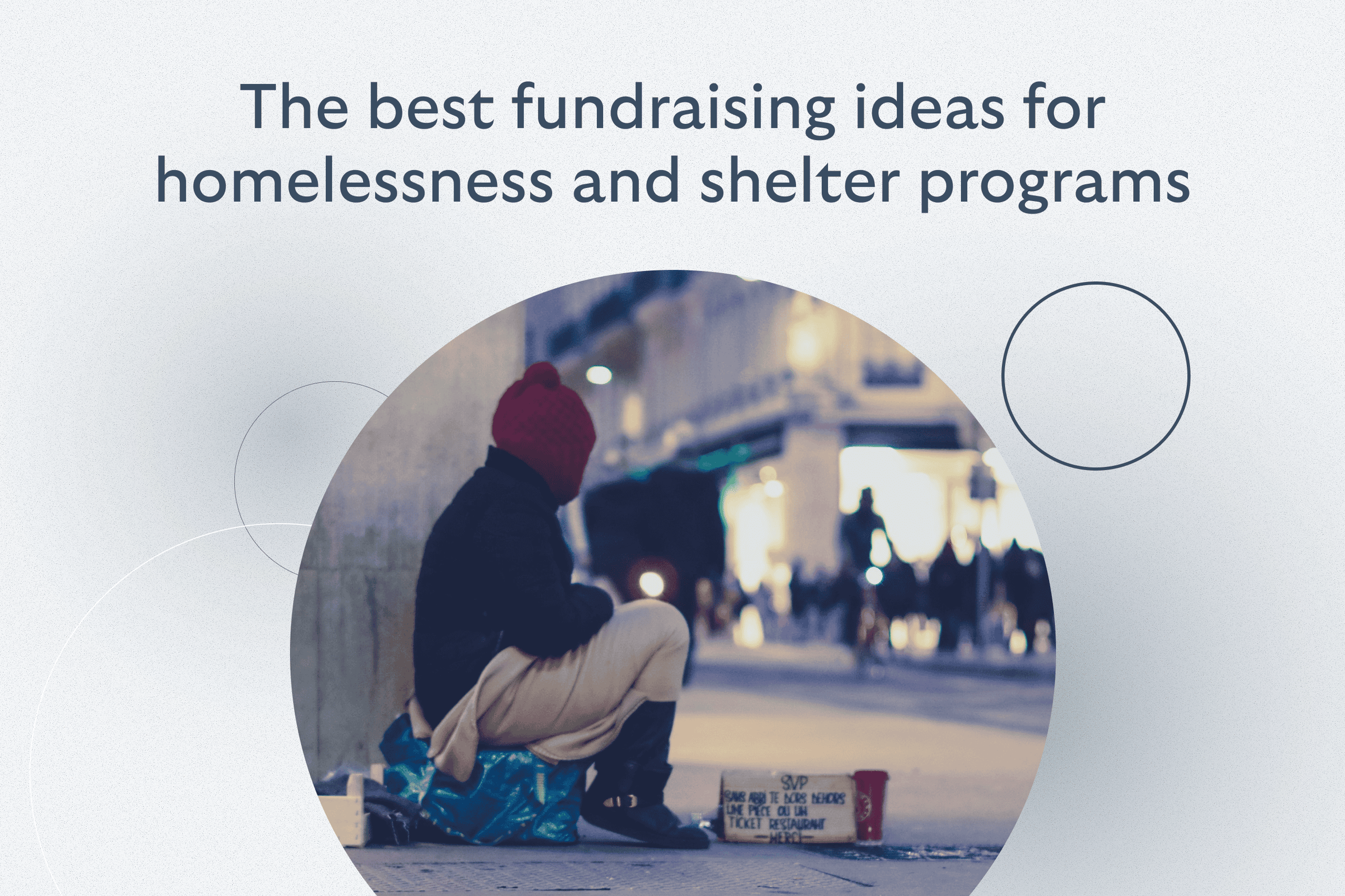
Homeless shelters and housing programs often face funding needs that cannot wait. A sudden cold snap may require extra beds, a family may need help with a deposit, or a shelter may need steady support for meals, staffing, and transportation.
The strongest fundraising campaigns turn these needs into clear, practical ways for people to help. They show donors what their gift will support, why the need matters now, and how the organization will use the funds. They also make it easier for staff to manage donations, report results, and build lasting donor relationships.
The following 11 fundraising ideas are designed for homeless shelters, transitional housing programs, and emergency housing nonprofits that need flexible, reliable ways to raise more.
Best fundraising ideas for homelessness and shelter programs at a glance
Fundraising idea | Best use | Fundraising potential | Staff effort | Upfront cost | Year-round potential |
Sponsor a safe night | Emergency shelter operations | High | Low | Low | High |
Move-in fund | Deposits and household setup | Medium | Medium | Low | High |
Impact-giving catalog | Multiple specific needs | High | Medium | Low | High |
Furnish a room or unit | Capital and move-in needs | Medium | Medium | Medium | Medium |
Extreme-weather appeal | Fast emergency response | High | Medium | Low | Low |
Monthly giving program | Predictable operating support | High | Medium | Low | High |
Matching-gift campaign | Closing a defined gap | High | Medium | Low | Medium |
Peer-to-peer campaign | Reaching new donors | High | Medium | Low | Medium |
Employer matching and volunteer grants | Added corporate support | Medium | Low | Low | High |
Adopt-a-need partnership | Local business support | High | Medium | Low | High |
Event fund-a-need appeal | Adding revenue to an event | High | Medium | Low | Medium |
Potential, effort, and cost will vary by audience size, local partners, and campaign scope.
11 practical fundraising ideas for homelessness and shelter programs
Let’s find out how you can raise funds with the following 11 ideas for shelter and homelessness programs.
1. Launch a sponsor-a-safe-night campaign
Calculate the full average cost of one occupied shelter night, including staffing, meals, utilities, security, cleaning, and case management.
Turn that figure into a suggested gift, but explain that donations support the shelter program as a whole rather than reserving a bed for one named person. Set a clear goal, such as “fund 300 safe nights this winter,” and update donors as nights are funded.
Tip: Present the amount as an impact example unless every donation will be legally restricted to that service.
2. Create a move-in fund for deposits and household essentials
Housing may be available, but application fees, security deposits, utility setup, transportation, and basic furnishings can delay a move. Build one fund that case managers can use for approved housing-startup costs.
Show the average cost of a complete move-in package and list its parts. State which expenses are covered, who qualifies through your program, and how unused or excess funds will be applied.
It gives donors a clear path from temporary shelter to stable housing without directing gifts to one individual.
3. Build an impact-giving catalog around verified shelter costs
Create giving levels based on costs confirmed by your finance and program teams.
A catalog might include a week of meals, document replacement, job-readiness support, childcare during a housing appointment, or a move-in package.
Include direct and shared program costs so the campaign does not suggest that services run without staff, facilities, technology, or administration.
4. Let donors furnish a shelter room or housing unit
Bundle approved items into standard packages for a bedroom, family room, kitchen, or complete housing unit.
Offer full and partial sponsorship levels, such as:
- Sponsor one bedroom
- Provide a complete kitchen package
- Fund a child’s study area
- Contribute toward a full unit setup
Add clear overfunding language. Use the same furniture, quality, and safety standards your program already follows instead of letting donors select items that may not fit the space or client needs.
5. Run an extreme-weather emergency appeal
Prepare a reusable campaign page before heat waves, freezes, storms, floods, or wildfire smoke create an urgent need.
Update it with:
- The current capacity gap
- Response dates
- The funding target
- Services being added
- The cost of the response
Funds might cover extended shelter hours, motel placements, water, transportation, cooling, heating, outreach supplies, or added staff shifts.
Continue posting progress updates until the emergency response period closes. Then tell donors what the appeal paid for.
6. Start a monthly giving program for recurring shelter costs
Build the monthly offer around costs that return every month: overnight staffing, meals, laundry, utilities, transportation, housing navigation, and follow-up support.
Monthly giving accounted for 27% of online nonprofit revenue in 2025, while monthly revenue grew 12% from the prior year.
Give the program a clear name and connect gift amounts to ongoing work. For example, a monthly donation could support regular transportation, meal service, move-in supplies, or a share of one night’s operating costs.
Tip: Send short updates to donors showing what reliable support keeps running.
7. Use a matching-gift campaign to close a specific funding gap
Ask a major donor, foundation, board group, or business to match new or increased gifts made by a firm deadline. State the gap, match limit, eligible gifts, and result: for example, opening ten overflow beds for 30 nights.
Matches can change donor behavior. 84% of donors are more likely to give when a match is offered, and one in three would give more.
Count only gifts covered by the written match agreement.
8. Launch a peer-to-peer campaign through volunteers and supporters
Ask board members, volunteers, former volunteers, faith communities, and housing advocates to create personal fundraising pages under one shelter campaign.
Give each person a realistic goal, approved photos, two email templates, and three social posts.
Keep the campaign running for 4–8 weeks and share a live team total. Supporters can explain why the mission matters to them, so the shelter reaches people outside its own email list without asking clients to share personal experiences.
9. Ask employers to match donations and volunteer hours
Add a matching-gift reminder to donation receipts and follow-up emails. Ask donors to check if their employers offer “dollars for doers” grants based on service hours.
Some companies match employee donations. Others provide volunteer grants after an employee completes a set number of service hours.
More than 26 million people work for companies with matching-gift programs, while an estimated $4–$7 billion in available matches goes unclaimed each year. Give supporters the donation receipt, tax ID, program link, and submission deadline they need to complete the request.
Raise more. Keep more.
Do more good.
Raise more with BetterWorld
10. Create an adopt-a-need partnership for local businesses
Offer businesses a clear sponsorship package that connects their support to a visible community need and gives them meaningful recognition.
A local business could:
- Sponsor move-in kits
- Fund emergency hotel stays
- Supply work clothing
- Support a housing navigator
- Fund meals during an extreme-weather response
In return, offer benefits such as logo placement on the campaign page, recognition in emails and social posts, event signage, staff volunteer opportunities, and a short impact report the company can share with employees and customers.
Tip: Create several sponsorship levels with a set value, time period, benefits, and reporting plan.
11. Add a fund-a-need appeal to a dinner, auction, or community event
Place the appeal after guests understand the funding gap but before their attention drops.
Use four to six giving levels tied to verified costs. Guests should be able to donate through a phone, QR code, pledge card, online form, or live paddle raise.
Do not limit the appeal to people in the room. Share the giving page before the event, display it during the program, and keep it open afterward for people who could not attend.
How should a shelter choose the right fundraising idea?
Start with one funding gap, not one fundraising format.
Ask these questions before selecting a campaign:
- How quickly is the money needed?
- Is the need restricted, flexible, recurring, or one-time?
- Can staff calculate and report the cost accurately?
- Is there a clear deadline?
- Does the campaign require an event, volunteers, or a lead donor?
- Does the organization already have the right audience?
Use an emergency appeal for urgent capacity, monthly giving for repeating costs, a move-in fund for housing transitions, and peer-to-peer fundraising when community reach matters most.
Run one main ask at a time. A clear campaign usually gives donors a better reason to act than several competing needs on one page.
A gala or auction may have high revenue potential, but it also requires more staff time and upfront planning. A focused online appeal may be a better option when the need is immediate.
How can shelters fundraise while protecting client dignity?
Client stories are not required for an effective appeal. Shelters can use aggregate results, verified costs, staff explanations, staged rooms, and service milestones.
Use people-first language, such as “people experiencing homelessness,” instead of defining someone by their housing situation.
Get informed, voluntary consent before sharing a personal story, quote, image, or video. Explain:
- Where the content will appear
- Who may see it
- How long it may be used
- Which details will be included
- How the person can raise concerns
Services should never be tied to participation in fundraising content.
Let storytellers review their words when possible. Avoid unnecessary details, remove identifying information when requested, and focus on goals, choices, strengths, and program results rather than using trauma as a fundraising tool.
For more practical guidance, use the National Health Care for the Homeless Council’s Storytelling Guide.
Run homelessness and shelter fundraising with BetterWorld
Shelter teams may need to launch an emergency campaign today, grow monthly support next month, and report results to a board, grantmaker, or government funder after that.
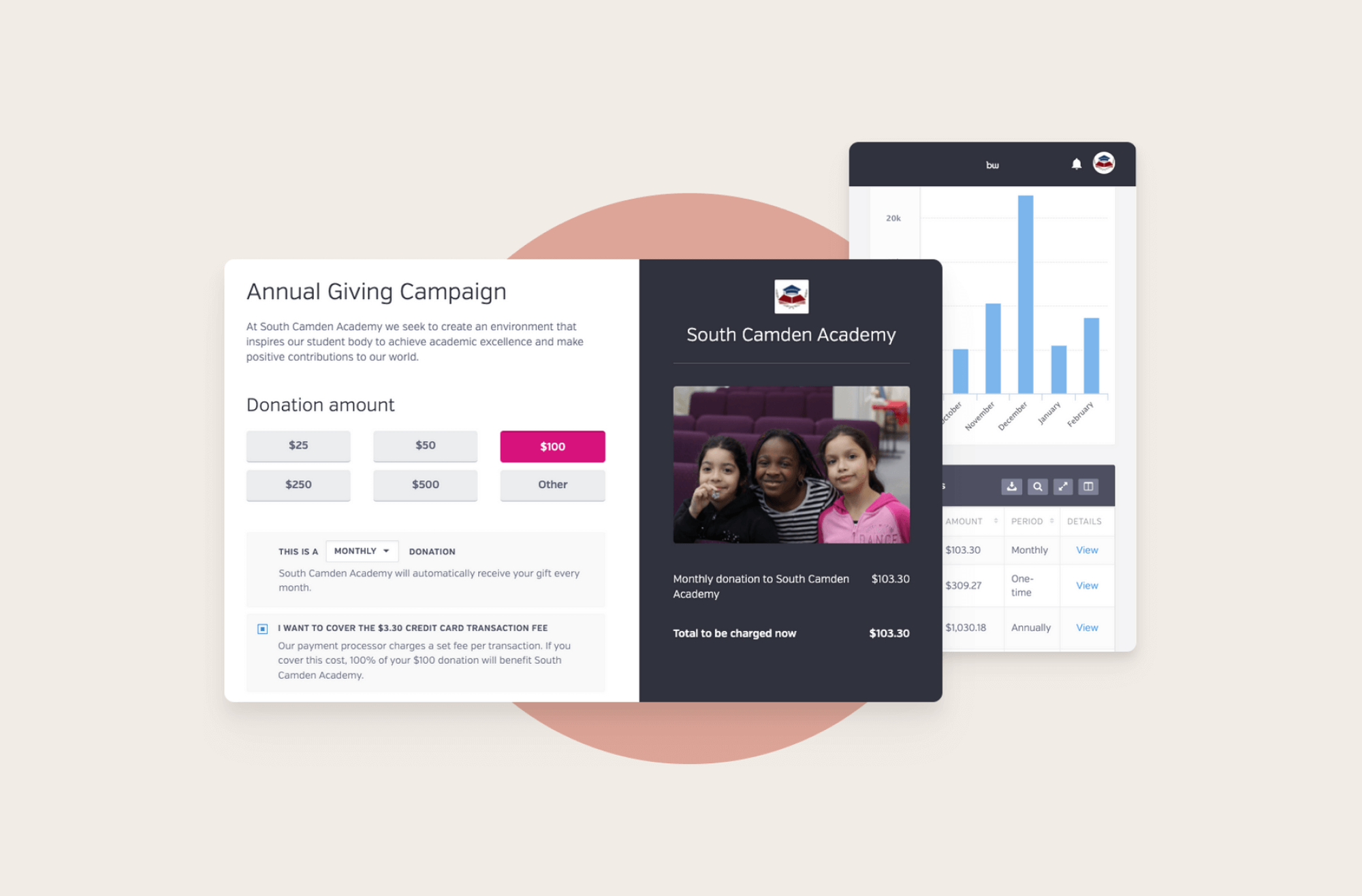
BetterWorld brings donation forms, recurring giving, crowdfunding, peer-to-peer fundraising, impact giving, auctions, ticketing, paddle raises, donor management, automated receipts, and real-time reporting into one platform.
Campaigns can be launched quickly, and organizations can start using the platform for free.
Housing and shelter organizations using BetterWorld include Room At The Inn, Family Promise of Juneau, Housing Unlimited, and Garden City Gospel Mission.
Bring emergency appeals, monthly donations, community campaigns, events, donor information, and reporting into one connected system.
Start fundraising for free or request a BetterWorld demo.
FAQs
1. How can a shelter raise money quickly for an emergency?
Launch a prebuilt emergency page with one target, a firm deadline, verified expenses, and daily updates. Share it first with past donors, volunteers, board members, local media, and business partners.
2. What should a shelter include in a donation receipt?
Include the nonprofit’s name, donation date, cash amount or item description, and whether the donor received anything in return. Do not assign a value to donated goods. Donors need written acknowledgment for individual contributions of $250 or more.
3. What should a shelter do if a campaign raises more than its goal?
Follow the overfunding language published on the campaign page. This may allow excess funds to support related services or the area of greatest need. If no such language exists and donations were restricted to a narrow purpose, seek professional guidance before redirecting the money.
4. How can shelters fundraise without sharing client identities?
Use aggregate outcomes, verified costs, anonymous quotes with permission, staged photos, and explanations from staff. A client’s name, face, location, or personal history is never required.
5. Can shelters ask donors to fund operating costs?
Yes. Staff, utilities, insurance, technology, and reporting are necessary to run safe shelter programs. Explain how these costs support reliable services rather than treating them as unrelated overhead.