- Fundraising ideas
- A-thons
- Asking for donations
- Auctions
- Crowdfunding
- Events
- Fundraising
- Nonprofits
- Peer to peer
- Virtual fundraising
A-thons, auctions, or crowdfunding: Which fundraiser is best for your youth organization?
Youth organizations have no shortage of fundraising ideas. The harder choice is finding a format that fits your staff time, volunteer network, young participants, and financial goal.
A-thon can turn youth energy into peer-to-peer donations. An auction can draw larger gifts from parents, alumni, and local businesses. Crowdfunding can fund a clear need without the work of planning an event.
Each can work well, but each asks something different from your team.
Let’s compare a-thons, auctions, and crowdfunding to see which fundraiser is the best fit for your youth organization.
Which fundraiser is best for your youth organization?
An a-thon is best for broad participation and family-led outreach. An auction fits organizations with valuable donated items and adult supporters who will bid. Crowdfunding is the fastest choice for one urgent, specific need that is easy to explain online.
A-thons vs. auctions vs. crowdfunding at a glance
Format | Best for | Main revenue source | Youth role | Typical preparation |
A-thon | Active communities and family networks | Flat donations or pledges tied to an activity | Central | 3–6 weeks |
Auction | Established donor and business networks | Competitive bids, tickets, and sponsors | Supporting | 6–10 weeks |
Crowdfunding | A specific project or urgent funding gap | Direct online donations | Optional | 1–2 weeks |
How does an a-thon fundraiser work for youth organizations?
An a-thon turns an activity into a peer-to-peer fundraiser. Common choices include walk-a-thons, read-a-thons, swim-a-thons, shoot-a-thons, and service-a-thons.
How participants collect pledges and donations
Each participant or team receives a fundraising page connected to the main campaign. Supporters can give a flat amount or pledge an amount for every completed unit, such as $2 per lap or $5 per book.
Give families a short message, a QR code, and three sharing prompts. Adult-managed pages should be used for minors. Track results through the platform instead of asking volunteers to calculate pledges and chase payments later.
As a general peer-to-peer benchmark, individual fundraisers generate an average of $568, with an average gift of $66. Treat this as a planning reference, not a promised result.
When is an a-thon the right choice for youth organizations?
Choose an a-thon when:
- You have a large group of youth participants.
- The activity fits your mission or program.
- Parents and volunteers can help participants reach donors.
- You want to involve people beyond your existing donor list.
- The activity can include different ages and ability levels.
Advantages of an a-thon
An a-thon gives young people an active role without asking them to handle money. Personalized pages also reach relatives, neighbors, alumni, and family friends who may not know the organization.
Limitations of an a-thon
Results can vary widely between participants. Staff must prepare families, answer questions, confirm activity totals, and plan for safety, accessibility, weather, and supervision.
How does an auction fundraiser work for youth organizations?
An auction raises money by letting supporters bid on donated items or experiences. It can run online, in person, or as a hybrid event.
How online and in-person bidding generate revenue
Local businesses, parents, alumni, and board members donate items. The youth organization lists each item with its fair market value, opening bid, photos, and closing time.
Supporters bid from their phones or during an event. Revenue can also come from admission tickets, sponsors, “buy now” prices, a direct appeal, and donations from guests who do not win an item.
When is an auction the right choice?
An auction makes sense when you have:
- Businesses willing to donate desirable items.
- Adult donors with the interest and ability to bid.
- Volunteers who can manage procurement and item pickup.
- An existing gala, banquet, tournament, or awards night.
- Enough planning time to build a strong catalog.
Advantages of an auction
Auctions can create several revenue streams during one campaign. They also give business partners a clear benefit through sponsor recognition and item promotion.
82% of surveyed auction attendees said they would return for another event from the same organization.
Limitations of an auction
Item procurement, photography, descriptions, pricing, bidder support, checkout, and distribution require more labor than a simple donation campaign. Purchased items can also reduce profit if they do not attract enough bids.
Raise more. Keep more.
Do more good.
Raise more with BetterWorld
How does crowdfunding work for youth organizations?
Crowdfunding uses one online campaign page to collect donations from many supporters. Unlike an a-thon, it does not require a separate page for every participant.
How an online crowdfunding campaign raises money
The organization publishes a specific goal, deadline, need statement, photos, gift amounts, and progress bar. Staff, board members, families, alumni, and volunteers share the same link through email, social media, text messages, newsletters, and QR codes.
A request such as “Help us raise $12,000 to replace our program van” is easier to act on than “Support our youth program.”
When is crowdfunding the right choice?
Crowdfunding works well for:
- Equipment and transportation needs
- Camp or program scholarships
- Facility repairs
- Tournament or competition travel
- A new after-school program
- A time-sensitive funding gap
Advantages of crowdfunding
A campaign can launch quickly and does not need a venue, item catalog, or participant tracking. Donors can give from any location, and the progress bar makes the remaining need visible.
Limitations of crowdfunding
The organization carries most of the promotion workload. Publishing a page is not enough; the campaign needs a launch group, planned updates, and a clear deadline.
How do a-thons, auctions, and crowdfunding compare?
The following ranges are practical planning estimates. Event size, supporter wealth, sponsorships, platform fees, and volunteer support will affect the final results.
Decision factor | A-thon | Auction | Crowdfunding |
Upfront cost | Low to moderate | Moderate to high | Low |
Staff and volunteer workload | Moderate | High | Low |
Youth participation | High | Low to moderate | Low to moderate |
Donor reach | Participant networks | Event guests and business networks | Existing digital and community networks |
Time needed to launch | Moderate | Longest | Fastest |
Revenue potential | Strong with many active participants | Strong with desirable items and bidders | Strong with a clear need and active promotion |
Donor data gained | Donors linked to participants or teams | Bidders, buyers, sponsors, and guests | Donors tied to one campaign |
Main risk | Uneven family participation | Too much work or weak items | Early attention fades |
Use net revenue, not gross revenue, to compare results. Subtract direct costs, payment and platform charges, item costs, promotion, venue expenses, and other paid support.
Then review staff hours, new donors, repeat donors, sponsor leads, and volunteer participation.
How can BetterWorld support each fundraising format?
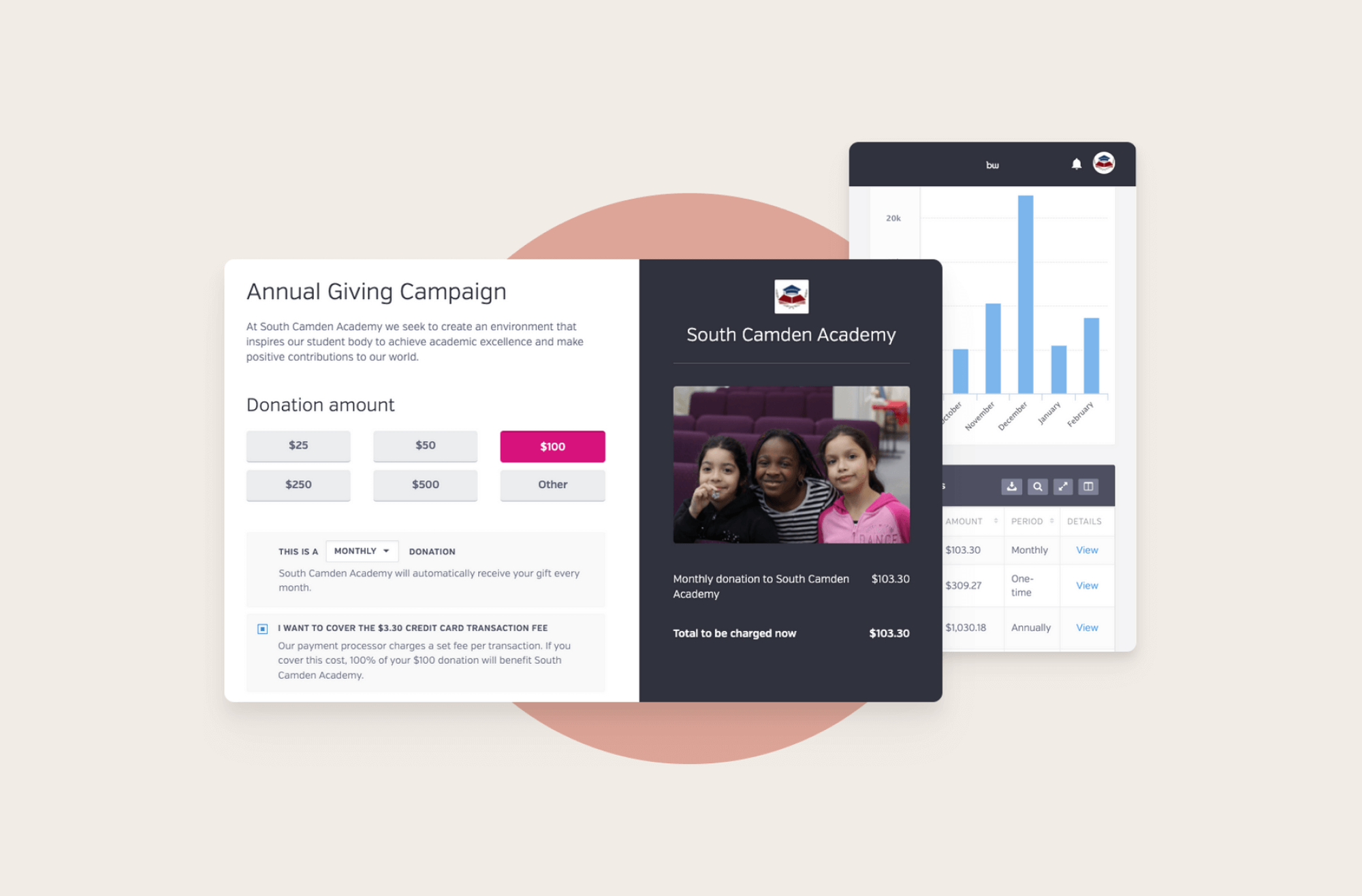
BetterWorld brings a-thons, peer-to-peer, auctions, crowdfunding, donor management, and real-time reporting into one platform.
Every plan includes the full fundraising toolset, and the Free plan has a 0% platform fee. Organizations can run unlimited campaigns and add unlimited teammates, which helps volunteers work without sharing one login.
One platform also makes it easier to see that a parent first gave through an a-thon, later bid in an auction, and then became a recurring donor. That history supports better follow-up and clearer reporting for boards, grants, and program planning.
GYIFT Foundation, which serves underserved youth in the United States and South Africa, raised more than $20,000 through its first major event on BetterWorld.
Request a BetterWorld demo or start a campaign for free.
FAQs
1. How long should each type of fundraiser run?
A practical starting point is four to six weeks for an a-thon, seven to fourteen days of active bidding after six to ten weeks of auction preparation, and four to six weeks for crowdfunding.
2. Which fundraiser works best for a small youth organization?
Crowdfunding is usually the simplest starting point because it requires no venue or item catalog.
An a-thon may be stronger when several families are ready to fundraise. Choose an auction only when you already have useful items, bidders, and enough help to manage it.
3. Can local businesses sponsor all three fundraising formats?
Yes. A business can sponsor an a-thon team or activity, donate or underwrite an auction package, or provide a crowdfunding match. Give sponsors a written benefit list, recognition timeline, contact person, and post-campaign results.
4. How should a youth organization measure fundraising profit?
Use this formula:
Net fundraising revenue = gross revenue − direct expenses − transaction costs
Report staff and volunteer hours separately. Also track new donors, repeat donors, average gift, participant activation, sponsor renewal, and cost per dollar raised. This shows which fundraiser created lasting value beyond its gross total.